Species learning profile
北極紅點鮭
Salvelinus alpinus
Arctic char (Salvelinus alpinus) is a freshwater fish associated with lake habitat in Global. It thrives farther north than any other freshwater fish.
Your learning progress stays on this device.
曾在 Fishdle 中登场
At a glance
- 水域
- 淡水
- Habitat
- 湖泊
- 最大长度
- 107 cm
- 分布范围
- 全球
- 科
- Salmonidae
- 目
- Salmoniformes
Observe
How to identify 北極紅點鮭
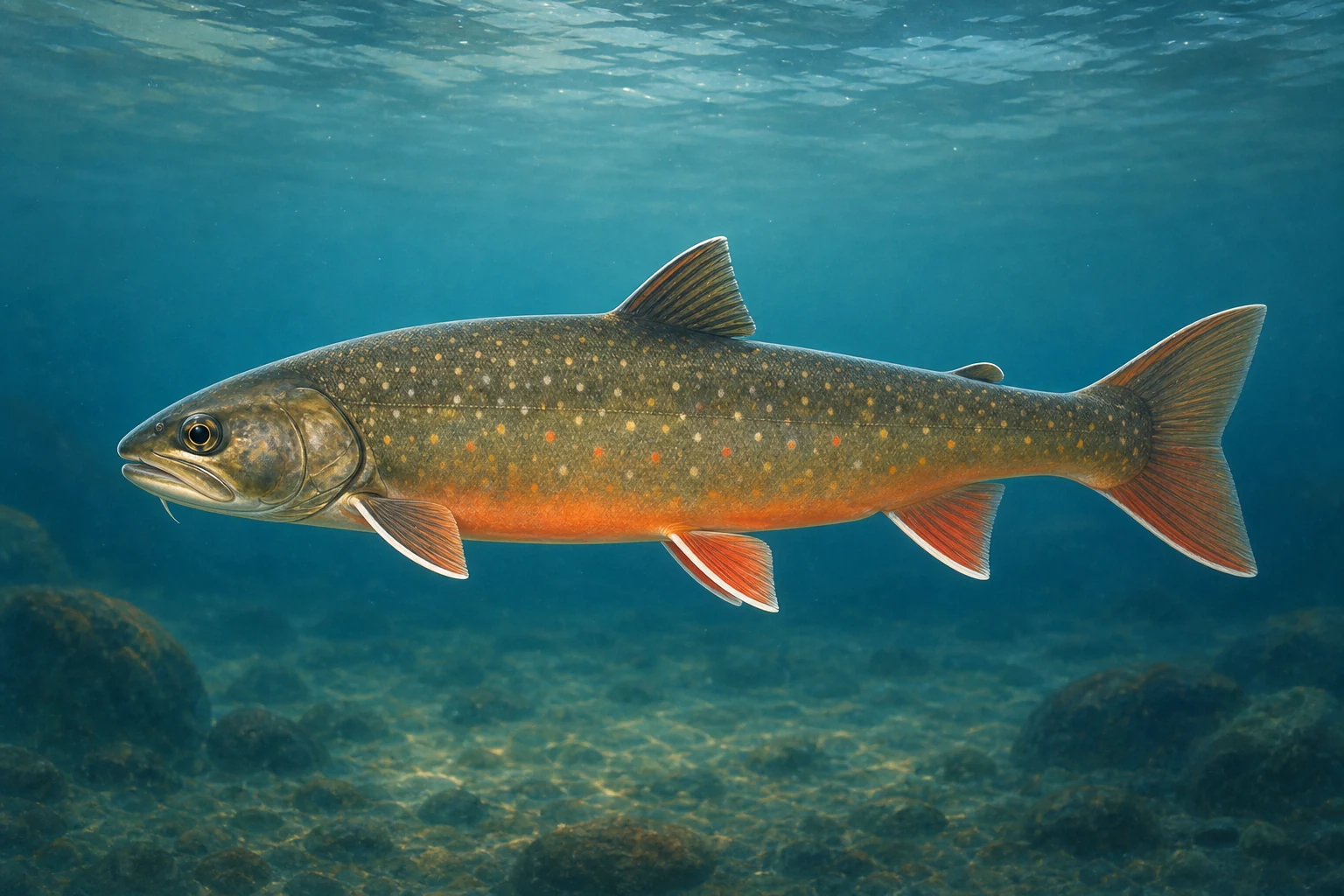
- Dark back with pale spots; breeding adults can be orange-red below.
- Streamlined, with light spots that stand out on darker skin.
- Reported maximum length: 107 cm — capable of growing longer than many people are tall. Maximum is not the same as typical adult size.
Field note: color, size, and markings can change with age, sex, season, depth, and lighting. Use several traits together.
Place and pattern
Where it lives—and how it behaves
Habitat and range
This species is associated with lake habitat across Global. Temperature, oxygen, depth, and shoreline cover divide a lake into very different living zones.
Behavior
Uses lake habitat for feeding, shelter, migration, or reproduction.
Food-web connections
What it eats and why it matters
Diet
Aquatic insects, crustaceans, and fish, changing with age and habitat.
Ecological role
It links one or more lake zones, carrying energy between bottom, shoreline, and open-water communities..
Remember
One fact worth keeping
北極紅點鮭可长到约 107 厘米,常见于湖泊附近。
Think like a conservationist
A conservation lens
Healthy lake populations depend on suitable temperature and oxygen, clean spawning areas, and balanced harvest and food webs.
This habitat lens is not a current population-status assessment. Status can differ among regions and change as new assessments are published; follow the reference links and local fisheries or wildlife agencies for current decisions.
Recall
Quick knowledge check
Which habitat is most closely associated with Arctic char in this guide?
Keep exploring
References and further reading
Fishdle summarizes stable identification and ecology concepts in plain language. Taxonomy and population knowledge continue to change, so use primary assessments and regional authorities for conservation or management decisions.
Make connections