Species learning profile
Achigan à grande bouche
Micropterus salmoides
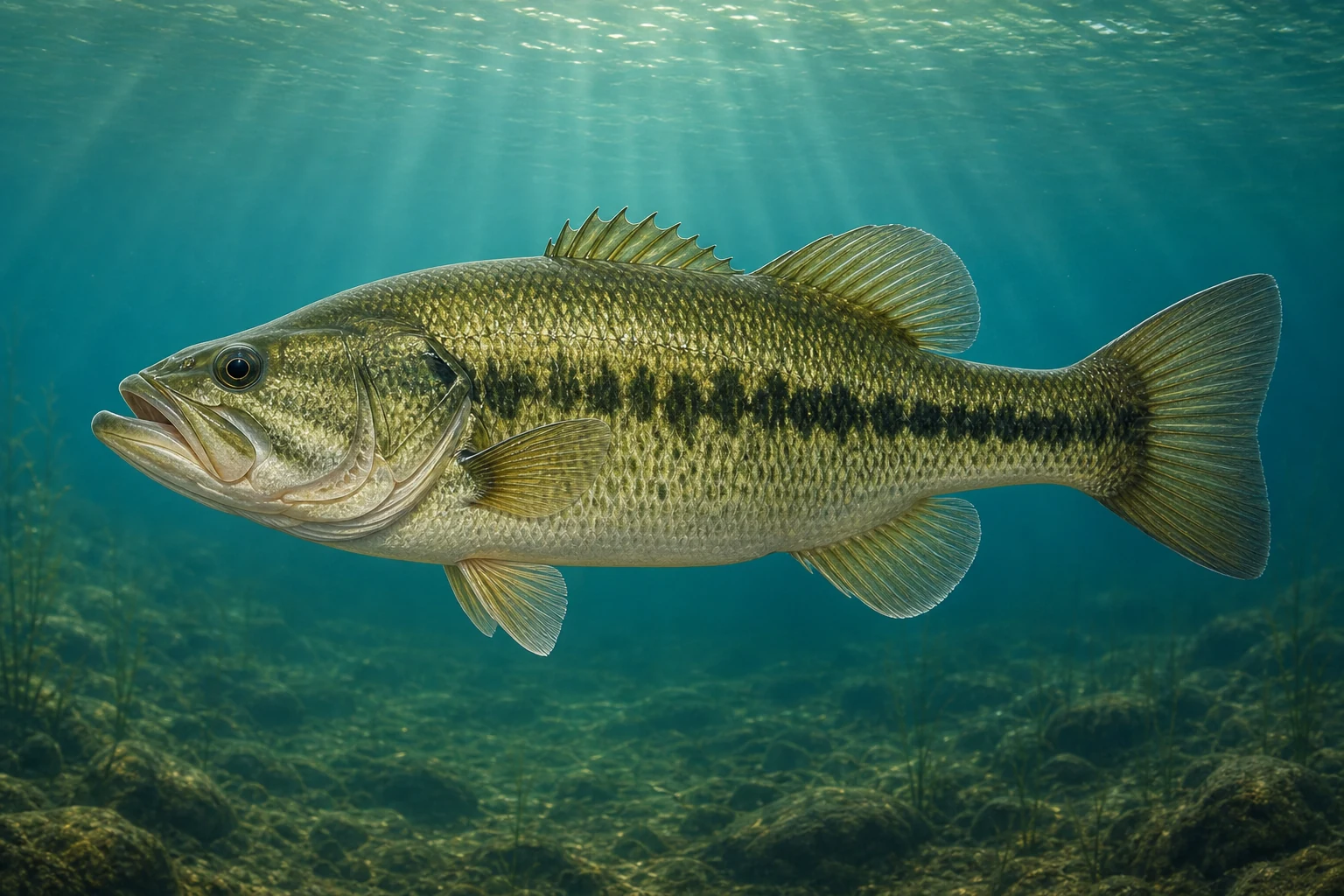
Largemouth bass (Micropterus salmoides) is a freshwater fish associated with lake habitat in North America. It can swallow prey nearly half as long as its own body.
Your learning progress stays on this device.
Déjà présenté dans Fishdle
At a glance
- Eau
- Eau douce
- Habitat
- Lac
- Longueur maximale
- 97 cm
- Répartition
- Amérique du Nord
- Famille
- Centrarchidae
- Ordre
- Centrarchiformes
Observe
How to identify Achigan à grande bouche
- Olive green with a dark horizontal stripe.
- Sturdy and streamlined with a mouth extending behind the eye.
- Reported maximum length: 97 cm — up to about the length of a guitar. Maximum is not the same as typical adult size.
Field note: color, size, and markings can change with age, sex, season, depth, and lighting. Use several traits together.
Place and pattern
Where it lives—and how it behaves
Habitat and range
This species is associated with lake habitat across North America. Temperature, oxygen, depth, and shoreline cover divide a lake into very different living zones.
Behavior
Uses lake habitat for feeding, shelter, migration, or reproduction.
Food-web connections
What it eats and why it matters
Diet
A species-specific mix of plant material, plankton, invertebrates, or other fish.
Ecological role
It links one or more lake zones, carrying energy between bottom, shoreline, and open-water communities..
Remember
One fact worth keeping
Achigan à grande bouche peut atteindre environ 97 cm et vit souvent près de Lac.
Think like a conservationist
A conservation lens
Healthy lake populations depend on suitable temperature and oxygen, clean spawning areas, and balanced harvest and food webs.
This habitat lens is not a current population-status assessment. Status can differ among regions and change as new assessments are published; follow the reference links and local fisheries or wildlife agencies for current decisions.
Recall
Quick knowledge check
Which habitat is most closely associated with Largemouth bass in this guide?
Keep exploring
References and further reading
Fishdle summarizes stable identification and ecology concepts in plain language. Taxonomy and population knowledge continue to change, so use primary assessments and regional authorities for conservation or management decisions.
Make connections