Species learning profile
Pari manta raksasa
Mobula birostris
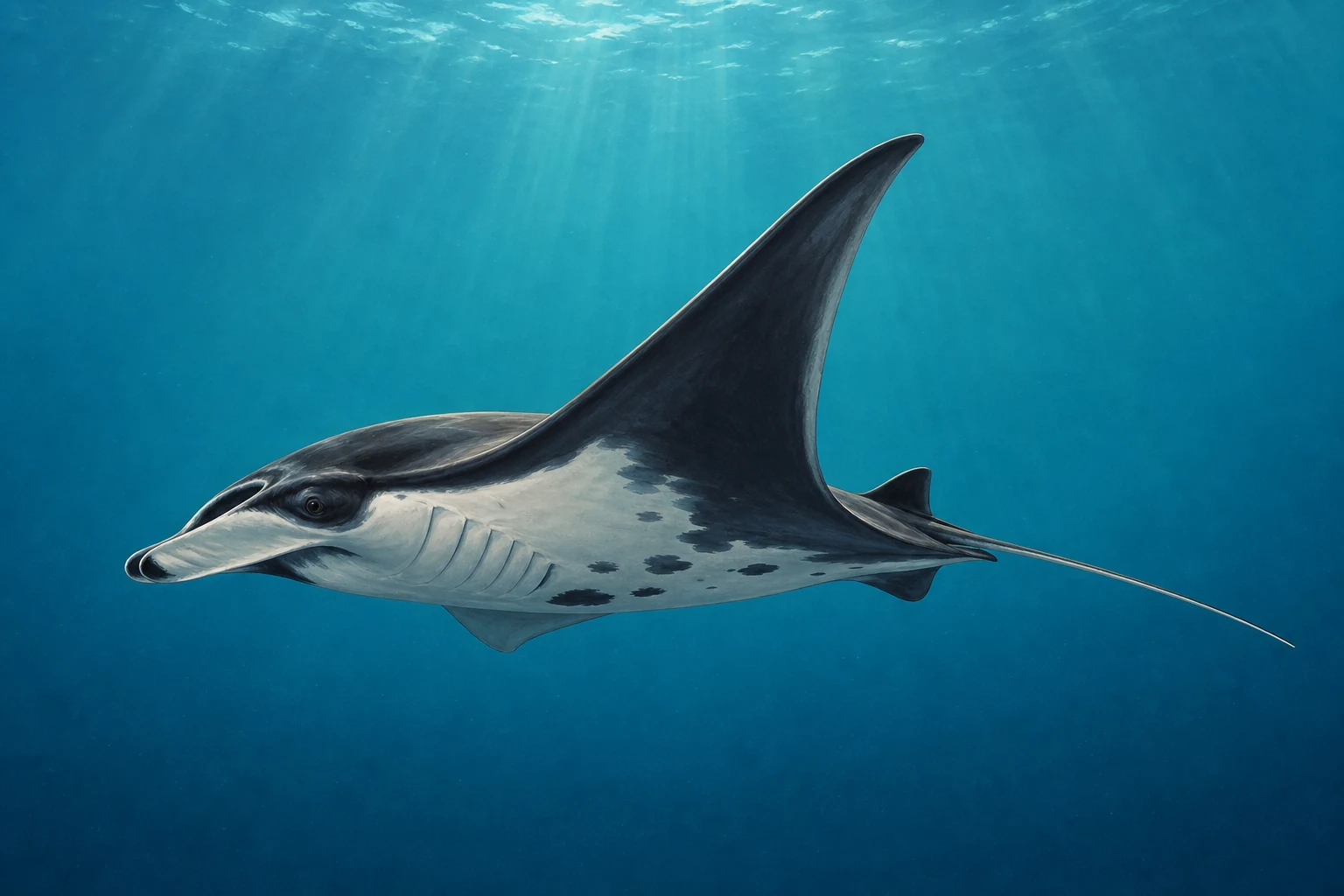
Manta ray (Mobula birostris) is a saltwater fish associated with open ocean habitat in Global. It filters plankton using wide cephalic fins.
Your learning progress stays on this device.
Pernah ditampilkan di Fishdle
At a glance
- Perairan
- Air laut
- Habitat
- Laut lepas
- Panjang maksimum
- 700 cm
- Sebaran
- Seluruh dunia
- Famili
- Mobulidae
- Ordo
- Myliobatiformes
Observe
How to identify Pari manta raksasa
- Dark on top and pale underneath.
- A huge, diamond-shaped body with wing-like fins.
- Reported maximum length: 700 cm — a genuinely giant fish. Maximum is not the same as typical adult size.
Field note: color, size, and markings can change with age, sex, season, depth, and lighting. Use several traits together.
Place and pattern
Where it lives—and how it behaves
Habitat and range
This species is associated with open ocean habitat across Global. With little fixed shelter, currents, temperature fronts, depth, and moving prey define its open-ocean world.
Behavior
Uses open ocean habitat for feeding, shelter, migration, or reproduction.
Food-web connections
What it eats and why it matters
Diet
A species-specific mix of plant material, plankton, invertebrates, or other fish.
Ecological role
It helps move energy across great distances in a food web with few physical boundaries..
Remember
One fact worth keeping
Pari manta raksasa dapat tumbuh hingga sekitar 700 cm dan sering ditemukan di sekitar Laut lepas.
Think like a conservationist
A conservation lens
Wide-ranging ocean fish can cross many jurisdictions, so bycatch, harvest limits, and international cooperation matter.
This habitat lens is not a current population-status assessment. Status can differ among regions and change as new assessments are published; follow the reference links and local fisheries or wildlife agencies for current decisions.
Recall
Quick knowledge check
Which habitat is most closely associated with Manta ray in this guide?
Keep exploring
References and further reading
Fishdle summarizes stable identification and ecology concepts in plain language. Taxonomy and population knowledge continue to change, so use primary assessments and regional authorities for conservation or management decisions.
Make connections