Species learning profile
Nile tilapia
Oreochromis niloticus
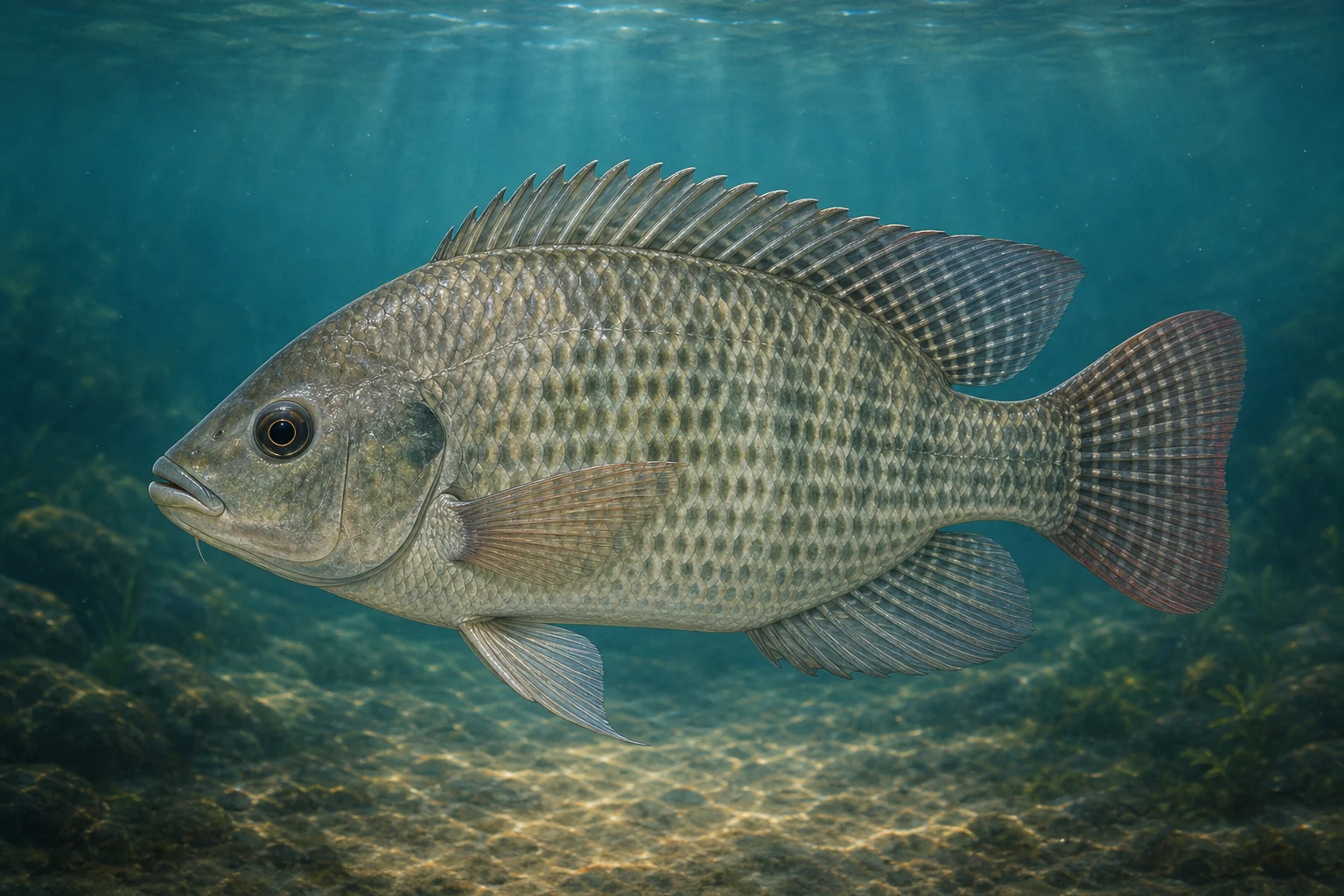
Nile tilapia (Oreochromis niloticus) is a freshwater fish associated with river habitat in Global. A widely farmed cichlid with attentive parents.
Your learning progress stays on this device.
पहले Fishdle में दिखाई गई
At a glance
- पानी
- मीठा पानी
- Habitat
- नदी
- अधिकतम लंबाई
- 60 cm
- विस्तार
- दुनिया भर में
- कुल
- Cichlidae
- गण
- Cichliformes
Observe
How to identify Nile tilapia
- Silver-grey with faint dark banding.
- Deep and oval, with one long dorsal fin.
- Reported maximum length: 60 cm — up to about the length of a guitar. Maximum is not the same as typical adult size.
Field note: color, size, and markings can change with age, sex, season, depth, and lighting. Use several traits together.
Place and pattern
Where it lives—and how it behaves
Habitat and range
This species is associated with river habitat across Global. Flow, seasonal floods, connected side channels, and access to spawning reaches all shape its river habitat.
Behavior
Uses river habitat for feeding, shelter, migration, or reproduction.
Food-web connections
What it eats and why it matters
Diet
A species-dependent mix of algae, invertebrates, plants, and smaller fish.
Ecological role
It participates in a connected river food web where nutrients and animals move both upstream and downstream..
Remember
One fact worth keeping
Nile tilapia लगभग 60 सेमी तक बढ़ सकती है और अक्सर नदी के आसपास मिलती है।
Think like a conservationist
A conservation lens
River fish depend on connected water. Dams, blocked migrations, pollution, and altered flow can matter even when the channel still looks wet.
This habitat lens is not a current population-status assessment. Status can differ among regions and change as new assessments are published; follow the reference links and local fisheries or wildlife agencies for current decisions.
Recall
Quick knowledge check
Which habitat is most closely associated with Nile tilapia in this guide?
Keep exploring
References and further reading
Fishdle summarizes stable identification and ecology concepts in plain language. Taxonomy and population knowledge continue to change, so use primary assessments and regional authorities for conservation or management decisions.
Make connections