Species learning profile
狹鱗庸鰈
Hippoglossus stenolepis
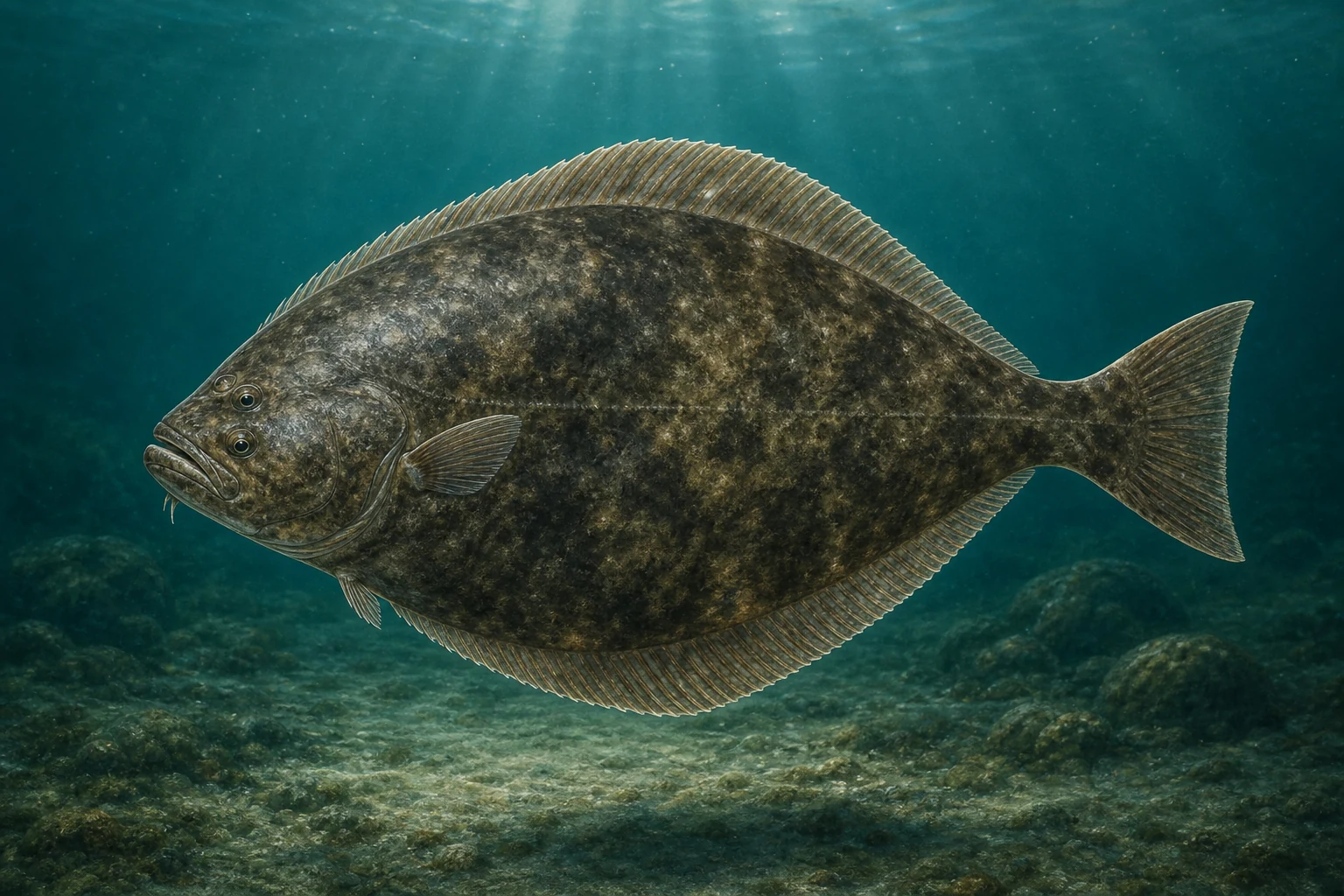
Pacific halibut (Hippoglossus stenolepis) is a saltwater fish associated with demersal habitat in Pacific. Both eyes end up on one side as it matures.
Your learning progress stays on this device.
曾在 Fishdle 中登场
At a glance
- 水域
- 海水
- Habitat
- 海底
- 最大长度
- 250 cm
- 分布范围
- 太平洋
- 科
- Pleuronectidae
- 目
- Pleuronectiformes
Observe
How to identify 狹鱗庸鰈
- Mottled brown on one side and pale on the other.
- Very flat and oval, with both eyes on the same side.
- Reported maximum length: 250 cm — a genuinely giant fish. Maximum is not the same as typical adult size.
Field note: color, size, and markings can change with age, sex, season, depth, and lighting. Use several traits together.
Place and pattern
Where it lives—and how it behaves
Habitat and range
This species is associated with demersal habitat across Pacific. It lives on or close to the bottom, where sediment, rock, depth, and bottom-dwelling prey matter most.
Behavior
Uses demersal habitat for feeding, shelter, migration, or reproduction.
Food-web connections
What it eats and why it matters
Diet
A species-specific mix of plant material, plankton, invertebrates, or other fish.
Ecological role
It connects bottom-dwelling prey with larger predators and may disturb sediment while feeding..
Remember
One fact worth keeping
狹鱗庸鰈可长到约 250 厘米,常见于海底附近。
Think like a conservationist
A conservation lens
Bottom-associated fish can be affected by seafloor disturbance, bycatch, warming, and changes to benthic prey.
This habitat lens is not a current population-status assessment. Status can differ among regions and change as new assessments are published; follow the reference links and local fisheries or wildlife agencies for current decisions.
Recall
Quick knowledge check
Which habitat is most closely associated with Pacific halibut in this guide?
Keep exploring
References and further reading
Fishdle summarizes stable identification and ecology concepts in plain language. Taxonomy and population knowledge continue to change, so use primary assessments and regional authorities for conservation or management decisions.
Make connections