Species learning profile
Atlantic wolffish
Anarhichas lupus
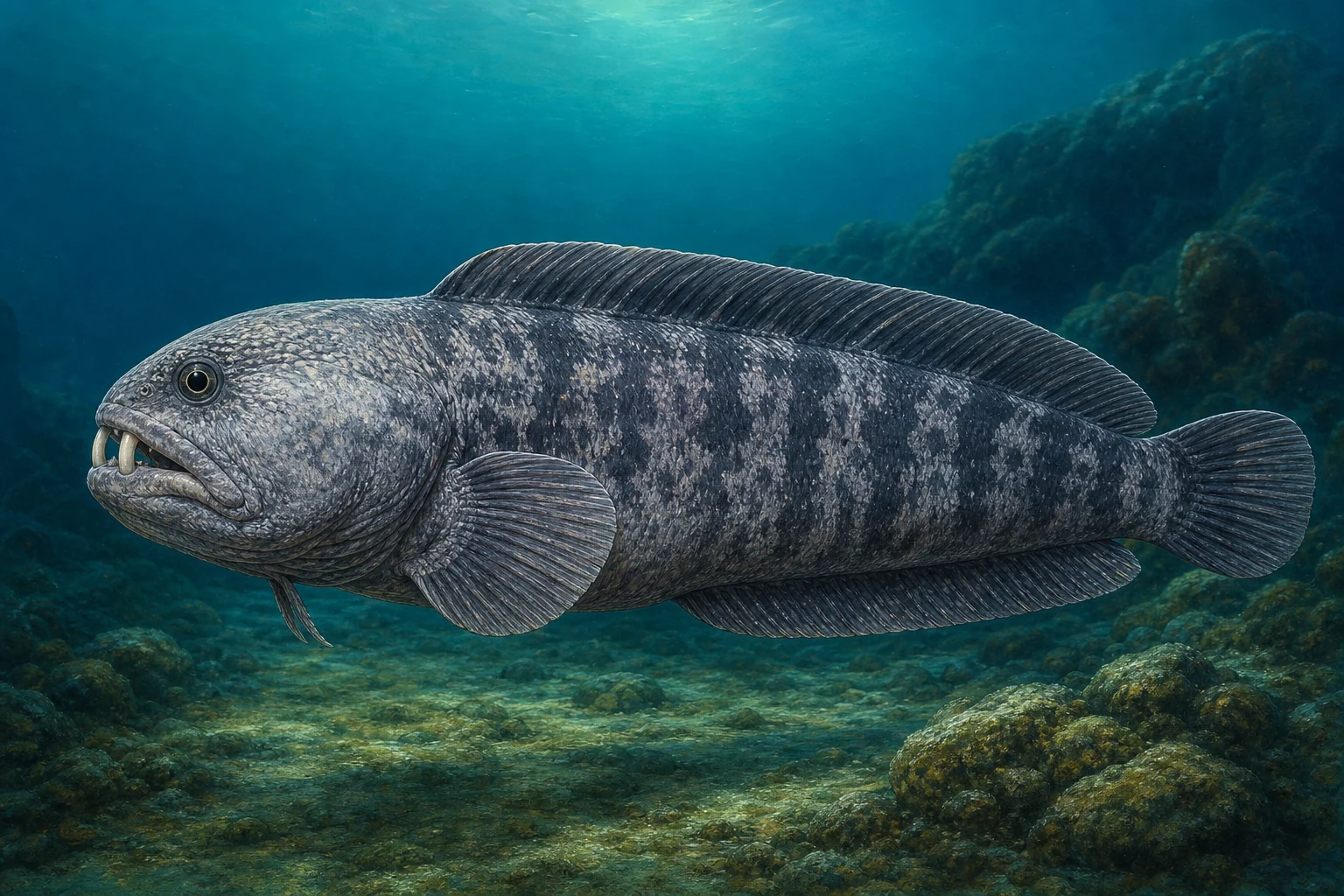
Atlantic wolffish (Anarhichas lupus) is a saltwater fish associated with demersal habitat in Atlantic. Powerful teeth crush hard-shelled prey such as sea urchins and crabs.
Your learning progress stays on this device.
پہلے Fishdle میں دکھائی جا چکی ہے
At a glance
- پانی
- سمندری پانی
- Habitat
- سمندر کی تہہ
- زیادہ سے زیادہ لمبائی
- 150 cm
- پھیلاؤ
- بحر اوقیانوس
- خاندان
- Anarhichadidae
- رتبہ
- Perciformes
Observe
How to identify Atlantic wolffish
- Blue-grey to olive with dark vertical bands.
- Long, thick-bodied, and big-headed with prominent fang-like teeth.
- Reported maximum length: 150 cm — capable of growing longer than many people are tall. Maximum is not the same as typical adult size.
Field note: color, size, and markings can change with age, sex, season, depth, and lighting. Use several traits together.
Place and pattern
Where it lives—and how it behaves
Habitat and range
This species is associated with demersal habitat across Atlantic. It lives on or close to the bottom, where sediment, rock, depth, and bottom-dwelling prey matter most.
Behavior
Uses demersal habitat for feeding, shelter, migration, or reproduction.
Food-web connections
What it eats and why it matters
Diet
A species-specific mix of plant material, plankton, invertebrates, or other fish.
Ecological role
It connects bottom-dwelling prey with larger predators and may disturb sediment while feeding..
Remember
One fact worth keeping
Atlantic wolffish تقریباً 150 سینٹی میٹر تک بڑھ سکتی ہے اور عموماً سمندر کی تہہ کے قریب ملتی ہے۔
Think like a conservationist
A conservation lens
Bottom-associated fish can be affected by seafloor disturbance, bycatch, warming, and changes to benthic prey.
This habitat lens is not a current population-status assessment. Status can differ among regions and change as new assessments are published; follow the reference links and local fisheries or wildlife agencies for current decisions.
Recall
Quick knowledge check
Which habitat is most closely associated with Atlantic wolffish in this guide?
Keep exploring
References and further reading
Fishdle summarizes stable identification and ecology concepts in plain language. Taxonomy and population knowledge continue to change, so use primary assessments and regional authorities for conservation or management decisions.
Make connections